The Flash Technique for Humanitarian Situations
Learn safe tools to process trauma with vulnerable populations.
CATTE is offering a live 2-day online course across two mornings:
- Day 1: Friday, August 21st 9:00 a.m.–12:15 p.m. PST / 11:00 a.m.–2:15 p.m. CST
- Day 2: Saturday, August 29th 9:00 a.m.–12:15 p.m. PST / 11:00 a.m.–2:15 p.m. CST
This course meets the qualifications for 6 hours of continuing education credit for LMFTs, LCSWs, LPCCs, and/or LEPs as required by the California Board of Behavioral Sciences. If you are licensed outside of California, please verify with your own state whether the course will count toward CEs for your state.
Sik-lam Wong, LMFT (Provider #1032833) is approved by the California Association of Marriage and Family Therapists to sponsor continuing education for LMFTs, LCSWs, LPCCs and LEPs. Sik-Lam Wong, LMFT, maintains responsibility for the program and all its content.
The webinar will not be recorded.
About the Flash Technique
In 2017, a new trauma therapy called the Flash Technique was developed by psychologist Dr. Phil Manfield in Berkeley, California. A leading trainer of EMDR, Dr. Manfield noticed that clients often had difficulty benefitting from EMDR because the protocol was too triggering for them, and they would abreact before any true trauma processing could occur. Dr. Manfield developed the Flash Technique as a tool for the Preparation Phase (Phase 2) of EMDR, to minimize abreaction. Rather than asking clients to recall a traumatic memory, he asked them to only identify the memory, set it aside and focus on an engaging memory or activity while blinking their eyes when prompted. He soon found that the Flash Technique could process trauma significantly on its own, even without EMDR.
Also based in Berkeley, Christian therapist Dr. Sik-Lam Wong, LMFT, was an early adopter of Manfield’s technique and has adapted the Flash Technique for use with groups and in humanitarian situations around the world. Sik-Lam has co-authored numerous articles in the EMDRIA Journal, showing the efficacy of the Flash Technique with diverse populations such as refugees, addicts, and incarcerated individuals. Based on these findings, Sik-Lam also has developed and published a theory of the neurobiological mechanisms at work in trauma recovery.
Why Learn the Flash Technique?
- It’s easy. Research has shown that student therapists can learn it and use it effectively with clients the very next day. Some clients can learn it and continue using it by themselves. One inmate who learned the Flash Technique even taught it to a fellow inmate and reported positive results!
- It’s safe. One of the risks of trauma therapy is that clients can easily become triggered or even retraumatized by their frightening memories, without trained intervention. However, the Flash Technique was designed by Dr. Phil Manfield to protect clients by focusing on positive resources rather than the trauma. Dr. Wong’s simplified Flash Technique protocols can even be safely used with large groups. Oftentimes, clients feel they are merely experiencing a relaxation exercise.
- It’s effective. With research studies encompassing over 1,000 clients so far, Dr. Wong has found the Flash Technique to consistently and significantly reduce PTSD symptoms with a very large effect size. The change is quick and profound, and happens without clients trying to cognitively process the memory. A pastor in the midst of ongoing war in Myanmar expressed profuse gratitude for the relief the Flash Technique brought him.
While no one technique can be a “magic bullet,” the Flash Technique is an easy tool to add to any therapist’s skill set. It can be used to safely process trauma with individuals, couples, and even groups. Many clients can process traumatic memories completely using the Flash Technique alone. In other cases, the Flash Technique can be used to decrease the intensity of traumatic memories, so that other trauma therapies can be used more safely and effectively.
Who Should Attend?
This course is designed for mental health professionals, including MFTs, LCSWs, LPCCs and LEPs. Pastoral counselors and trained lay counselors (such as Stephen’s ministers or others trained for similar peer counseling ministries) may also audit this course.
About the Course
This training covers the basics of the Flash Technique, a unique and user-friendly trauma intervention that requires clients not to focus on the traumatic memory. Instead, clients are asked to focus on something pleasant or neutral, helping them to stay calm during the process.
Besides theoretical knowledge, we offer attendees an opportunity to experience 5 different scripted Flash Technique protocols for trauma intervention, under the direction of the trainer. Attendees will also learn to do the different protocols themselves, using the scripts and resources provided.
This training is geared towards practitioners working with populations with little access to trauma intervention. These populations may be people living in war-torn areas. They may be missionaries/workers in isolated areas having to deal with their day-to-day stresses alone. Or they may be folks in homeless shelters or refugees who have few counseling resources. The materials taught in this class may help such marginalized populations to self-administer the Flash Technique, with little or minimal support from professional counselors.
Besides working with marginalized populations, participants will be able to introduce the scripted Flash Technique protocols to their own therapy clients, to help them process traumatic memories on their own between counseling sessions, thereby shortening the time for trauma recovery.
About the Instructor
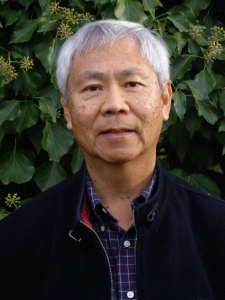
Sik-Lam Wong, LMFT #92414, became a psychotherapist after his retirement from a 30-year career as a research physicist. He was an early adopter and researcher of the Flash Technique. Sik-Lam published the first paper on FT groups in 2019 as well as the first theory paper on the Flash Technique in 2021. He has been training master-level social work students on the Flash Technique at California State University, East Bay, since 2020. Recently, he also trained counseling students at both University of Texas, Rio Grande Valley, and Wayne State University. Sik-Lam also taught the Flash Technique to master-level and PhD counseling students at the Hunan Normal University in China and in 2023 co-authored the first Flash Technique paper in China. He also co-authored the first book in Chinese for the Flash Technique in 2025. Sik-Lam is active in humanitarian work, providing group Flash Technique intervention, training and support to marginalized populations in different parts of the world, including migrants at the US-Mexican border, victims of the civil war in Ethiopia and in Myanmar.
Citations
The content of this course is based on theoretical, methodical, research, and/or practical knowledge, including but not limited to the following sources:
Gustavson, K., Wong, S and Le, D. (2023). Research on Low-Intensity Flash Technique trauma intervention by pre-licensed student-clinicians. Journal of EMDR Practice and Research, 17 (2), 54-69. http://dx.doi.org/10.1891/EMDR-2022-0059
Ling, H., Liu H., Zhou, W., Yan, Y., Wong, S., and Zhang, J. (2024). Intervention of Flash Technique on anxiety of college students with childhood trauma (in Chinese with English abstract). Chinese Journal of Clinical Psychology 32(1), 222-227. https://dx.doi.org/10.16128/j.cnki.1005-3611.2024.01.041
Ling, H., Zhou, Y., Wang, Y., Yan Y., Wong, S., and Zhang, J. (2024). A Case study of Flash Technique improving depression in early trauma survivors (in Chinese with English abstract). Chinese Journal of Clinical Psychology. 32(2), 475-479. https://dx.doi.org/10.16128/j.cnki.1005-3611.2024.02.042
Ling, H. and Wong, S. (2025). Trauma Treatment without Trauma Disclosure (in Chinese). Central South University Press.
Manfield, P., Lovett, J., Engel, L., & Manfield, D. (2017). Use of the Flash Technique in EMDR therapy: Four case examples. Journal of EMDR Practice and Research, 11(4), 195–205. doi:10.1891/1933-3196.11.4.195
Woldemariam, S., Ashman, D., Carvalho, E., Wong, S., and Hoersting, R. (2024). AIP-based Professional Intervention Program for Adversity (PIPA) for trauma and stress reduction in groups: a pilot study in Ethiopia. Frontiers of Psychiatry 15:1351713. https://dx.doi.org/10.3389/fpsyt.2024.1351713
Wong, S. (2018). EMDR-based divorce recovery group: a case study. Journal of EMDR Practice and Research, 12(2), 58–70. https://dx.doi.org/10.1891/1933-3196.12.2.58
Wong, S. (2019). Flash Technique Group Protocol for highly dissociative clients in a homeless shelter: a clinical report. Journal of EMDR Practice and Research, 13(1), 20-31. https://doi.org/10.1891/1933-3196.13.1.20
Wong, S. (2021). A model for the flash technique (FT) based on working memory and neuroscience research. Journal of EMDR Practice and Research, 15(3), 174-184. https://dx.doi.org/10.1891/EMDR-D-21-00048
Wong, S. and Forman-Patel, H. (2022). Doing FT without BLS and without prompted blinking: two vignettes. Journal of EMDR Practice and Research, 16(2), 2022. 61-67. https://dx.doi.org/10.1891/EMDR-2022-0001
Wong, S., Ling, H. & Liu, Y. (2026). Testing Wong’s Theory on the Flash Technique with Published Timing Data for Healthy Subjects. Journal of EMDR Practice and Research 15 Jan 2026, Vol 20, Article ID: 0020, DOI: 10.34133/jemdr.0020
Yan, Y., Ling, H., and Wong, S. (2023). Is exposure necessary? Flash Technique for post-traumatic stress response (in Chinese with English abstract). Advances in Psychological Science 31(8), 1517–1527. https://dx.doi.org/10.3724/SP.J.1042.2023.01517
Yznaga, S., Wong, S., and Maniss, S. (2025). The Flash Technique as an Effective Low-Intensity Intervention for Migrants at the Point of Entry (2025). (In press) Journal of EMDR Practice and Research.
Course Pricing
Live Webinar
-
- Live Only
- No Recording Available
- Day 1: Friday, August 21st 9:00 a.m.–12:15 p.m. PST / 11:00 a.m.–2:15 p.m.
- Day 2: Saturday, August 29th 9:00 a.m.–12:15 p.m. PST / 11:00 a.m.–2:15 p.m